

When a serious truck collision occurs on U.S. roads, the aftermath isn’t just physical — it’s legal and financial. For victims pursuing compensation, federal truck safety rules shape how fault is determined, what evidence is admissible, and how liability is assigned. These regulations also affect insurance practices, enforcement policies, and compliance standards that trucking companies must follow.
In 2026, several proposed and newly implemented federal safety rules from the Federal Motor Carrier Safety Administration (FMCSA) and related agencies are reshaping the landscape of truck crash liability. These changes influence everything from driver qualification standards and reporting requirements to vehicle technology mandates and enforcement systems — all of which can impact how compensation is determined after a collision.
Understanding these rules is crucial for injured victims, their families, and their legal representation. This post will explain the latest federal safety rule developments, how they relate to truck accident compensation, and what injured parties should know as they pursue justice and recovery.
Federal Truck Safety Rulemaking
The Federal Motor Carrier Safety Administration (FMCSA) is the federal agency responsible for regulating the trucking industry to improve roadway safety and reduce crashes, injuries, and fatalities involving commercial motor vehicles. Formed in 2000 under the U.S. Department of Transportation, its role includes issuing and enforcing safety regulations governing everything from hours of service to vehicle maintenance, driver qualifications, and compliance measurement systems.
Federal safety rules are published through the Federal Register, which provides official documentation of proposed and final regulations. Trucking companies, drivers, and the public can comment before proposals become law. These regulations are codified in the Federal Motor Carrier Safety Regulations (FMCSRs) — the backbone of federal truck safety law.
For accident victims seeking compensation, these rules are more than technical details. They often determine how liability is assigned in litigation and insurance claims. For example:
- Did a driver comply with hours‑of‑service rules governing driving/rest time?
- Were safety devices like automatic emergency braking properly installed and maintained?
- Did a trucking company follow federal reporting and recordkeeping requirements?
Changes to these rules can significantly affect both how attorneys build cases and how insurance companies defend them.
Key 2026 Safety Rule Changes Affecting Trucking
Below are the most important federal safety rule changes and proposals in 2026 that are shaping truck accident liability and compensation.
Proposed Automatic Emergency Braking (AEB) Mandate

One of the most talked‑about proposed rules would require Automatic Emergency Braking (AEB) systems on new Class 7 and 8 trucks. These systems detect potential collisions and automatically apply brakes when drivers don’t react in time. AEB has been shown to significantly reduce rear‑end crashes and could eliminate many common truck collision scenarios.
Although still in the proposal stage, many fleets are preparing for eventual compliance. From a compensation standpoint, if a truck lacked AEB where it should have had it, injured victims’ lawyers may argue that failure to equip mandated safety technology contributed to the accident. This can be critical evidence in proving negligence.
 Speed Limiter Rule Withdrawal
A separate proposed rule that would have required federally mandated speed limiters on trucks over 26,000 pounds has been withdrawn. Regulatory filings in 2025 confirmed that the FMCSA and NHTSA dropped the mandate, meaning that federal law no longer requires speed governors on heavy trucks — at least for now.
This withdrawal has implications for accident compensations. Some state laws or insurance policies consider speed compliance when assessing negligence. Without a federal speed limiter requirement, liability arguments can hinge more on actual documented speed rather than compliance with a technical mandate.
Safety Measurement System (SMS) Overhaul
The FMCSA is currently overhauling its Safety Measurement System (SMS) — the tool used to monitor and score carriers’ safety performance. This revised SMS aims to be fairer and more transparent while continuing to prioritize unsafe operators for intervention.
For injured clients, SMS scores can be persuasive evidence in court or negotiations. A pattern of poor safety performance can strengthen arguments that a carrier’s negligence harmed your client. The changes are expected to refine how violations are categorized and weighted.
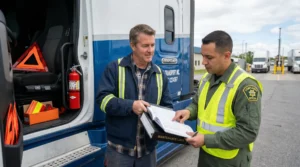 Driver Qualification and Compliance Enforcement
2026 also brings renewed focus on enforcement of driver qualification standards — including stricter reviews of CDL eligibility, language proficiency, and medical certification reporting.
A driver who didn’t meet qualification standards at the time of a crash might be deemed negligent per se — meaning the violation itself establishes negligence. This status can dramatically affect compensation outcomes.
Elimination of MC Number and Modernization of Records
Major changes in federal trucking registrations took effect that eliminate the separate MC number, consolidating authority identification under the USDOT number. This modernization is intended to cut red tape and reduce fraudulent documentation.
From a compensation perspective, accurate carrier identification is vital in litigation and enforcement actions against negligent trucking companies.
How New Rules Affect Compensation After a Truck Accident
Federal truck safety rules influence compensation in several ways:
Establishing Standards of Care
Safety regulations create baseline standards of care for carriers and drivers. If a rule exists that was violated at the time of a crash — such as logbook requirements, driver qualifications, or vehicle safety tech — that violation can directly strengthen a victim’s negligence claim.
Evidence and Crash Investigation
New/future rules that require advanced safety technology (like AEB) or refined reporting procedures affect what evidence is available after a crash. Data from onboard systems can show exactly how the accident unfolded, which is crucial in determining fault and compensation.
Insurance Defenses & Liability Limits
Insurers often use compliance with federal rules as an argument to limit liability. Conversely, noncompliance can be leveraged to increase settlement value. As rules evolve, both personal injury lawyers and insurers adjust their strategies to reflect the regulatory environment.
Comparative Fault & Regulatory Compliance
In jurisdictions that allow comparative fault, evidence of compliance or non‑compliance with safety regulations plays directly into percentage allocations of fault among parties. This impacts total compensation.
What Injured Victims Should Do Now
If you or a loved one has been seriously injured in a wreck involving a commercial truck:
✔ Document everything immediately.
✔ Preserve all data and investigation reports.
✔ Consult attorneys experienced in federal trucking rules.
✔ Ask how emerging regulations may apply to your case.
Because federal safety standards are dynamic, lawyers must stay current to build compelling cases and pursue full compensation.
Conclusion
Truck accident compensation in 2026 and beyond continues to be shaped by federal safety rule changes. Emerging technologies, revised compliance systems, and strengthened enforcement all influence how lawyers prove negligence and seek just compensation. While some proposals like automatic emergency braking are still pending, enforcement and modernization efforts are already changing how accident liability is assessed.
For accident victims and their families, understanding these rules can make a real difference in the outcome of your claim. Keep informed, work with experienced legal counsel, and use federal safety regulations as part of your strategy to pursue maximum compensation.