
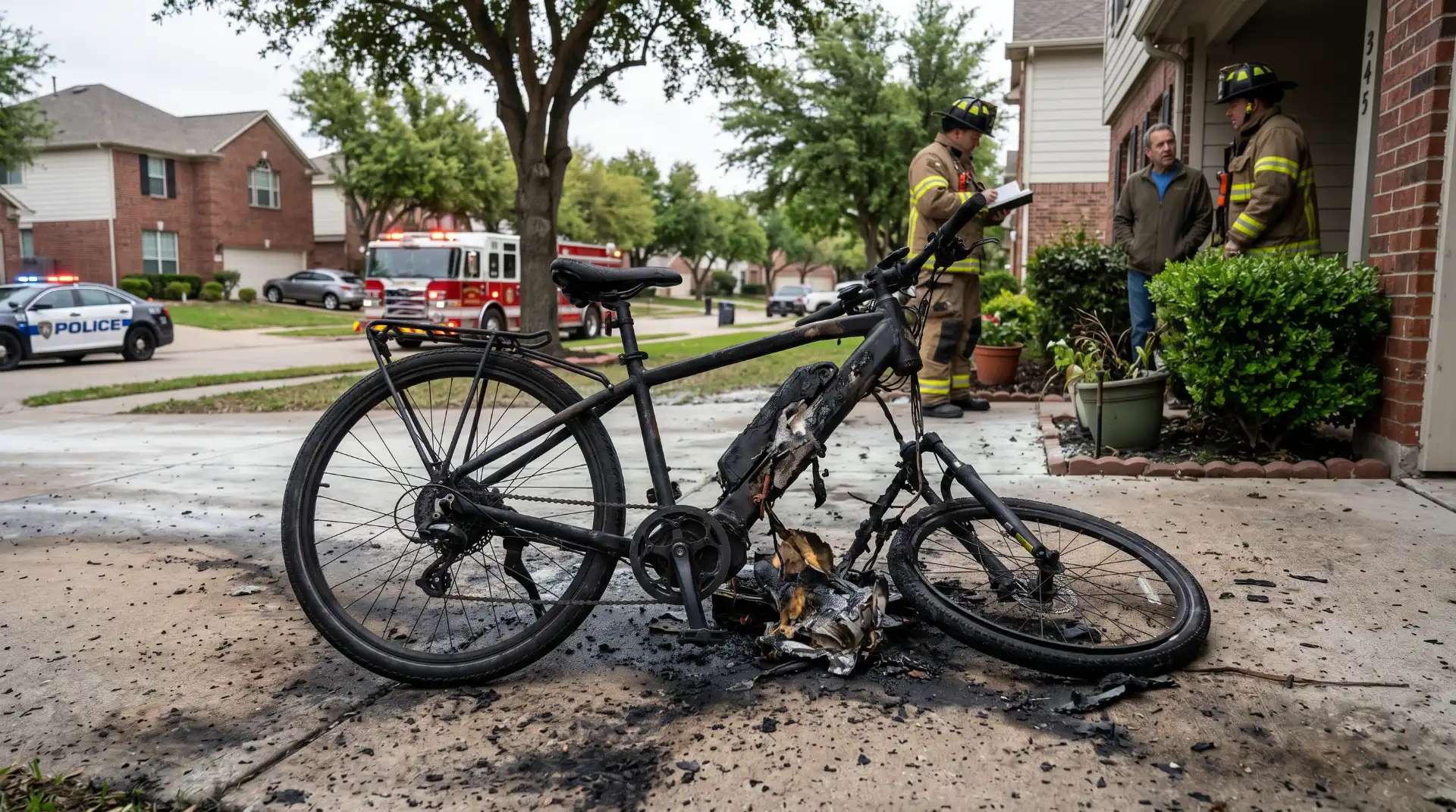
Electric bicycles have become a common sight across the United States. From daily commuters and college students to delivery drivers and recreational riders, millions of Americans now rely on e-bikes for convenient transportation. While these vehicles offer many advantages, growing concerns about battery safety have placed e-bike battery fires under increased scrutiny.
E-bike battery fire injuries can be devastating. Unlike a typical bicycle accident, these incidents often involve intense heat, explosions, toxic smoke, and rapidly spreading flames. Victims may suffer severe burns, respiratory complications, permanent scarring, and significant property damage. In some cases, battery fires have resulted in fatalities.
As reports of lithium-ion battery fires continue to make headlines, understanding the causes of these incidents and the legal issues that may follow has become increasingly important for consumers throughout the United States.
Why E-Bike Battery Fires Are Becoming More Common
The popularity of electric bicycles has grown dramatically over the past several years. As more consumers purchase e-bikes, the number of battery-related incidents has naturally increased as well. However, the rise in fires is not solely due to increased usage.
Many experts point to the growing availability of inexpensive batteries and aftermarket replacement parts. Some products entering the market may not undergo the same testing and quality control measures as batteries manufactured by established companies. When battery cells are poorly designed or assembled, the risk of overheating can increase significantly.
The demand for longer battery life has also contributed to the issue. Manufacturers continuously seek ways to store more energy in smaller battery packs. While technological advances have improved performance, they have also created situations where battery failures can become more dangerous when they occur.
Federal agencies, including the Consumer Product Safety Commission (CPSC), have issued multiple warnings regarding lithium-ion battery safety. Consumers can review safety alerts, recalls, and guidance through the CPSC website at https://www.cpsc.gov.

How Lithium-Ion Battery Fires Occur
Most e-bikes operate using lithium-ion batteries. These batteries store a substantial amount of energy in a compact space, making them ideal for electric transportation. Under normal conditions, lithium-ion batteries function safely and efficiently. Problems arise when internal battery components become damaged or defective.
One of the primary concerns involves a process known as thermal runaway. Thermal runaway occurs when a battery cell begins generating heat faster than it can dissipate it. As temperatures rise, neighboring cells may also overheat, creating a chain reaction throughout the battery pack.
During thermal runaway, batteries may release flammable gases that ignite almost instantly. Once ignition occurs, the fire can spread rapidly and produce temperatures capable of causing severe injuries within seconds.
Battery fires may also result from manufacturing defects, physical damage following a collision, exposure to water, improper charging practices, or the use of incompatible charging equipment. In many cases, investigators must examine the battery itself to determine the exact cause of the failure.
The Most Common Injuries Caused by E-Bike Battery Fires
The injuries associated with e-bike battery fires often extend far beyond what people typically associate with bicycle accidents. The combination of fire, heat, smoke, and explosive force creates the potential for catastrophic harm.
Burn injuries are among the most frequently reported consequences. Depending on the intensity and duration of exposure, victims may suffer first-degree, second-degree, or third-degree burns. Severe burns can damage muscles, nerves, and underlying tissues, requiring extensive medical treatment and long recovery periods.
Smoke inhalation presents another serious concern. Burning lithium-ion batteries may release toxic fumes that affect the respiratory system. Victims exposed to smoke may experience breathing difficulties, lung irritation, or long-term pulmonary complications.
In certain incidents, batteries have exploded before or during a fire. These explosions can propel debris outward at high speeds, causing lacerations, eye injuries, facial trauma, and hearing damage. If a rider loses control of an e-bike during a battery failure, additional injuries such as fractures, traumatic brain injuries, and spinal cord injuries may occur.
The emotional impact can be substantial as well. Many survivors experience anxiety, sleep disturbances, and ongoing fear related to using electric mobility devices after a traumatic fire event.
Why These Injuries Can Be More Serious Than Traditional Bicycle Accidents
Traditional bicycle accidents often involve collisions, falls, or roadway hazards. While these incidents can certainly produce serious injuries, e-bike battery fires introduce additional dangers that are not typically present in conventional crashes.
One major difference is the speed at which battery fires develop. A rider may have only seconds to react once a battery begins overheating or emitting smoke. This limited response time can make it difficult to avoid injury.
Another factor is the intensity of the heat generated during a lithium-ion battery fire. These fires frequently burn at temperatures significantly higher than ordinary household fires, increasing the likelihood of severe burns and extensive property damage.
Battery fires can also occur when an e-bike is not in use. Numerous incidents have been reported while batteries were charging inside homes, garages, apartment buildings, and commercial properties. As a result, injuries may affect not only riders but also family members, neighbors, and bystanders.
Who May Be Responsible for an E-Bike Battery Fire?
Determining responsibility for an e-bike battery fire often requires a detailed investigation. Several parties may potentially share liability depending on the circumstances surrounding the incident.
Battery manufacturers are commonly examined first. If a defect existed during the design or production process, the manufacturer may face responsibility for resulting injuries and damages.
The company that manufactured or assembled the e-bike may also be investigated. Even if the battery itself was supplied by another company, the overall design of the product may have contributed to unsafe conditions.
Component suppliers sometimes play a role as well. Chargers, battery management systems, electrical connectors, and other components may contribute to battery failures when defects are present.
Retailers and distributors may become involved in certain situations, particularly when recalled or defective products remain available for sale despite known safety concerns.
In some cases, maintenance providers or repair facilities may face scrutiny if improper modifications or repairs contributed to the battery malfunction.
Product Liability Claims Involving E-Bikes
Many e-bike battery fire cases fall under the area of law known as product liability. Product liability laws exist to hold manufacturers and other responsible parties accountable when defective products cause harm.
A product liability claim may involve allegations that a battery contained a manufacturing defect, suffered from a dangerous design flaw, or lacked adequate safety warnings. Each theory focuses on different aspects of the product and its development.
Manufacturing defects involve mistakes that occur during production. A battery that leaves the factory with damaged internal components may create risks that were never intended by the original design.
Design defects focus on the product itself. Even when manufactured correctly, a product may still be considered unreasonably dangerous if safer alternatives were available.
Failure-to-warn claims may arise when manufacturers do not adequately communicate known risks, proper charging procedures, or warning signs associated with battery failure.
What Evidence May Help After an E-Bike Battery Fire
Evidence often plays a critical role in understanding how an e-bike battery fire occurred. Preserving important information can help investigators identify contributing factors and determine whether a defect was involved.
Photographs of the scene, the damaged e-bike, and the battery itself may provide valuable insight. Medical records documenting injuries and treatment may also become important when evaluating damages.
Purchase receipts, warranty information, product packaging, and maintenance records can help establish the history of the e-bike and battery. Fire department reports and witness statements may provide additional details regarding how the incident unfolded.
Whenever possible, the damaged battery and e-bike should be preserved rather than discarded. These items may contain critical evidence needed to identify the cause of the failure.
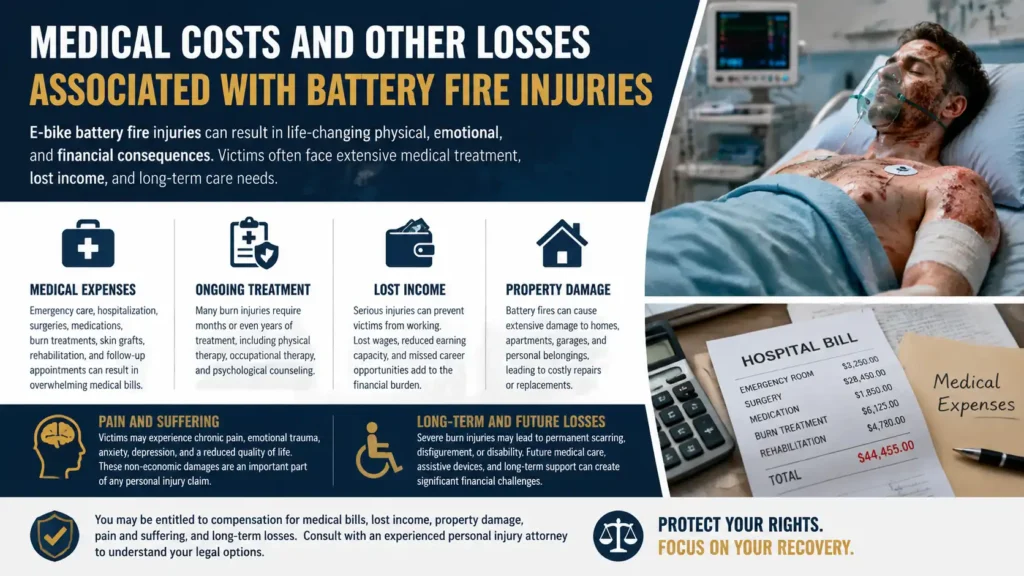
Medical Costs and Other Losses Associated With Battery Fire Injuries
The financial consequences of a battery fire injury can be substantial. Severe burn injuries often require emergency treatment, hospitalization, specialized wound care, and multiple surgical procedures.
Recovery may continue for months or even years. Some victims require skin grafts, physical therapy, occupational therapy, and ongoing medical monitoring. Lost income can create additional financial pressure, particularly when injuries prevent a return to work.
Property damage may further increase losses. Fires originating from e-bike batteries have damaged homes, apartment buildings, vehicles, garages, and personal belongings. The overall impact often extends well beyond the initial injury itself.
What To Do After an E-Bike Battery Fire
After a battery fire, immediate medical attention should remain the top priority. Even burns that appear minor may worsen over time or lead to complications.
Once medical needs have been addressed, documenting the scene and preserving evidence can be helpful. Taking photographs, gathering witness information, and saving purchase records may provide valuable information later.
Reporting the incident to appropriate authorities and manufacturers may also create important documentation regarding the event. In situations involving serious injuries or suspected product defects, a legal review may help determine whether additional investigation is warranted.
How an Accident Lawyer May Help
E-bike battery fire cases often involve technical issues related to engineering, manufacturing processes, product testing, and consumer safety standards. Investigating these matters may require input from experts in battery technology, fire science, and product design.
An attorney handling product liability matters may help evaluate available evidence, identify potentially responsible parties, and assess the damages associated with an injury. Every case presents unique facts, making a thorough review important when determining available legal options.
Conclusion
E-bike battery fire injuries represent a growing safety concern as electric bicycles become increasingly popular across the United States. While many riders use these products safely every day, defective batteries, manufacturing problems, and improper charging practices can create serious risks. Understanding how these incidents occur, the injuries they may cause, and the potential legal issues involved can help consumers make informed decisions following a battery-related accident.