
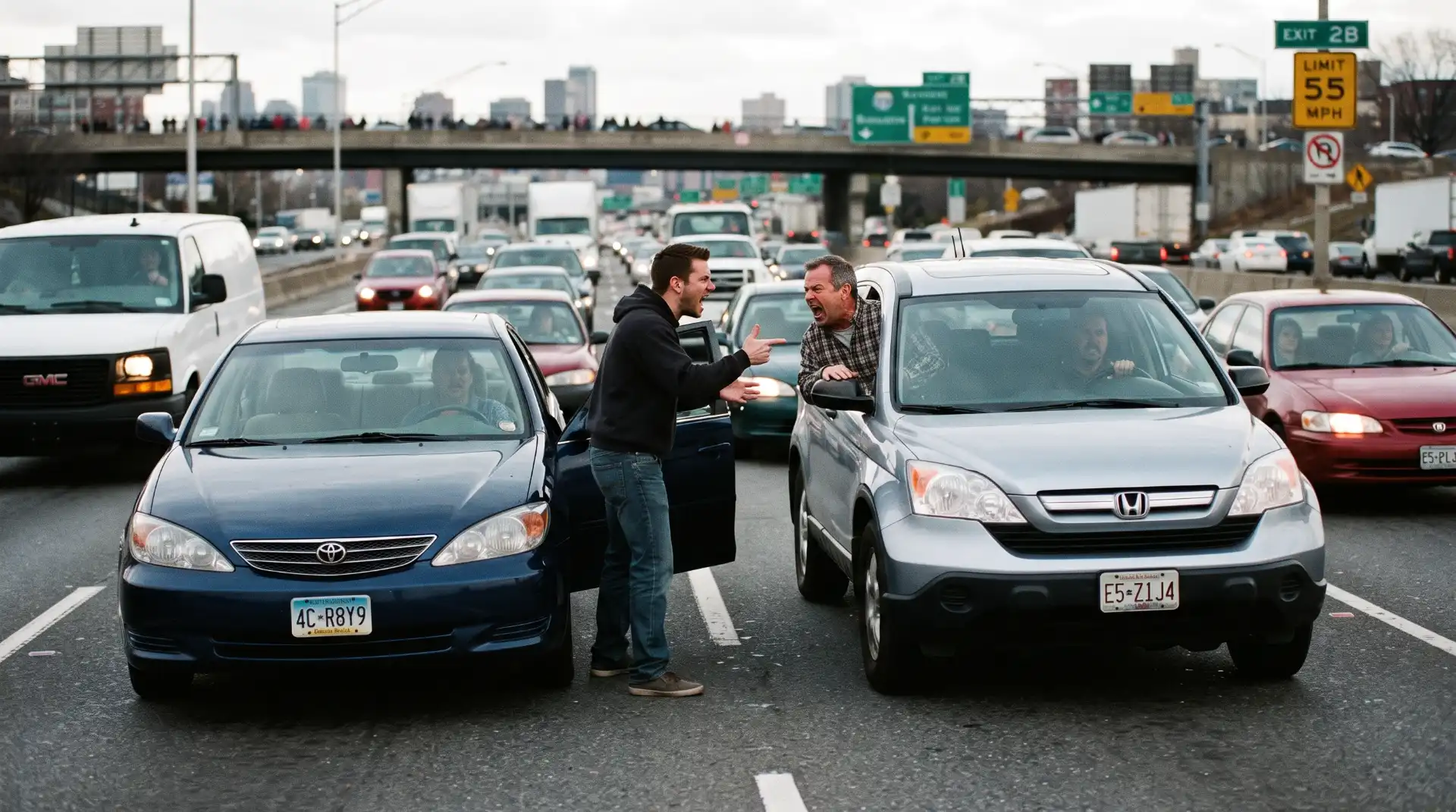
Aggressive driving can turn an ordinary trip into a serious collision within seconds. Speeding, tailgating, unsafe lane changes, deliberate blocking, sudden braking, and other confrontational driving behaviors may place drivers, passengers, motorcyclists, bicyclists, and pedestrians at risk.
Road rage accidents may also create legal questions that differ from those in routine traffic crashes. The conduct leading to the collision may be intentional, reckless, negligent, or a combination of several behaviors. Determining what happened can affect liability, insurance coverage, available damages, and the evidence needed to support an injury claim.
Across the United States, aggressive driving remains a significant traffic safety concern. The National Highway Traffic Safety Administration reported that speeding was involved in 11,288 traffic deaths in 2024. NHTSA also continues to target excessive speeding and aggressive driving through national enforcement and education efforts.
Understanding what separates aggressive driving from road rage, what evidence may establish fault, and what an injured person can do after a crash can provide useful context when evaluating a potential claim.
What Is Aggressive Driving?
Aggressive driving generally describes a pattern of unsafe traffic behaviors performed with disregard for other road users. It can involve a single dangerous maneuver, but many incidents develop through several actions occurring close together.
A driver might begin by speeding, move rapidly between lanes, follow another vehicle too closely, and then attempt to prevent that vehicle from changing lanes. Another situation might involve a motorist reacting angrily after being passed and accelerating to catch the other vehicle.
Aggressive driving does not always involve an argument between motorists. Some people drive aggressively simply because they are impatient, running late, frustrated by congestion, or trying to move through traffic faster.
Common behaviors associated with aggressive driving include excessive speeding, tailgating, abrupt lane changes, running red lights, failing to yield, passing improperly, cutting off another vehicle, blocking a vehicle from merging, and repeatedly changing lanes.
These behaviors can increase both the likelihood of a crash and the severity of injuries when one occurs.
According to the National Highway Traffic Safety Administration, excessive speeding remains one of the major risky driving behaviors addressed through national traffic safety programs.
What Is Road Rage?
Road rage is generally more confrontational than ordinary aggressive driving. It may occur when a driver becomes angry at another road user and reacts by deliberately intimidating, threatening, following, or confronting that person.
For example, a motorist who is cut off in traffic might begin following the other vehicle closely. The motorist could then attempt to block it, force it from a lane, or pursue it after the vehicles leave the highway.
Some road rage incidents escalate beyond unsafe driving into threats or physical violence. Criminal laws governing those actions vary by state.
From a personal injury perspective, the distinction matters because an accident caused by an intentional act may raise different insurance and liability questions than a crash caused by ordinary negligence.
An insurance policy may cover negligent driving while excluding certain intentional conduct. However, every policy and accident is different. A claim may also involve several legal theories depending on the circumstances surrounding the collision.
Aggressive Driving and Road Rage Remain Common Concerns
Recent research illustrates how frequently American motorists encounter or engage in aggressive behavior.
A 2025 study from the AAA Foundation for Traffic Safety examined 21 aggressive driving and road rage behaviors. Researchers found that 96 percent of surveyed drivers reported engaging in at least one measured behavior during the previous year.
The study identified behaviors involving attempts to get ahead in traffic, putting others at risk, controlling another driver’s actions, expressing displeasure, provoking reactions, and violence.
Not every aggressive behavior results in a collision. However, the combination of speed, reduced following distance, abrupt maneuvers, and emotional decision making can quickly remove the margin drivers normally have to avoid a crash.
Higher speeds can make the consequences even more serious.
NHTSA reported that speeding contributed to 29 percent of traffic fatalities in 2024. The agency estimated that 316,757 people were injured in speeding-related crashes that year.
These statistics do not represent road rage incidents alone. They do show why excessive speed, which frequently appears in aggressive driving situations, remains an important road safety issue.
How Road Rage Accidents Happen
Road rage crashes can develop in many ways.
One common scenario begins with tailgating. An aggressive motorist follows another vehicle at an unsafe distance. If traffic slows suddenly, the following driver may not have enough room to stop.
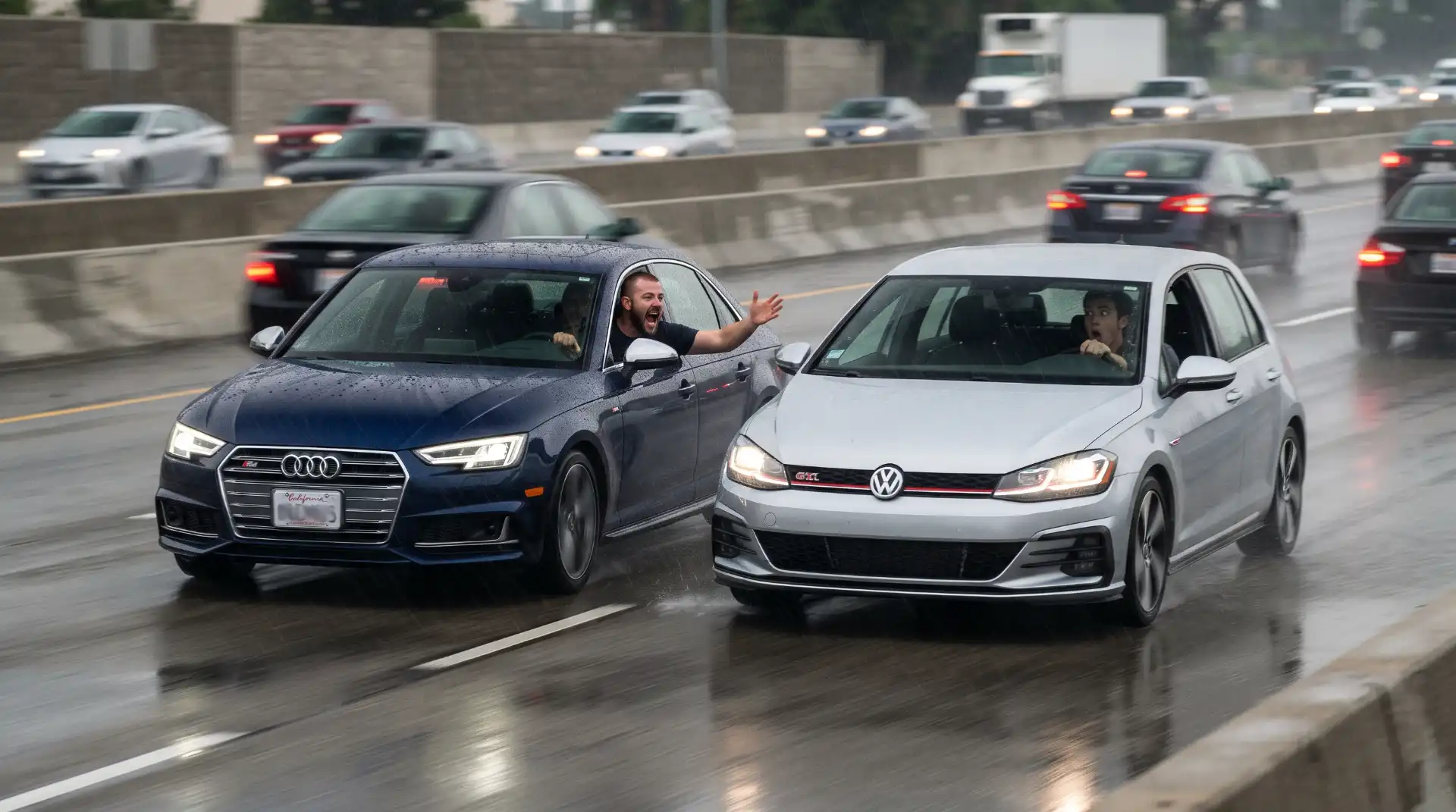
Another situation involves abrupt lane changes. A driver might repeatedly move between lanes while trying to overtake slower traffic. A sideswipe collision can occur if the motorist misjudges spacing or fails to notice a vehicle in an adjacent lane.
Deliberate blocking can create another hazard. A driver may accelerate when another vehicle attempts to merge or change lanes. That behavior could force the other motorist toward another vehicle, a median, a shoulder, or a roadside object.
Some confrontations involve sudden braking. A driver who believes another vehicle is following too closely might intentionally brake sharply. The resulting collision can create disputes over what each driver did before impact.
Road rage may also continue after drivers leave a freeway or highway. A motorist might follow another vehicle through several streets, creating a series of dangerous interactions before a collision occurs.
Because these crashes often involve several events rather than one isolated mistake, reconstructing the complete sequence can become particularly important.
Who May Be Liable for a Road Rage Accident?
Liability generally depends on what caused the collision and the laws of the state where it occurred.
A driver who speeds, tailgates, runs a traffic signal, makes an unsafe lane change, or otherwise violates traffic laws may be responsible when that conduct contributes to a crash.
Road rage can make the analysis more complicated when the driver acts deliberately.
Suppose a motorist intentionally swerves toward another vehicle during an argument. The other driver reacts by steering away and crashes into a barrier. Even though the vehicles never physically touch, evidence showing that the aggressive driver’s actions caused the evasive maneuver could become relevant to liability.
Another accident might involve multiple drivers.
For example, an aggressive motorist may cut across several lanes and cause two other vehicles to collide while avoiding the first vehicle. Investigators may need to evaluate the movements of every vehicle involved.
The exact rules differ among states. Some jurisdictions use comparative negligence systems, while others apply different rules when more than one person contributed to an accident.
Because AccidentLawFirmNearMe.com serves a national audience, readers should check the laws that apply where their collision occurred.
Can Both Drivers Share Responsibility?
Yes. Some crashes involve conduct by more than one motorist.
Two drivers may react aggressively toward each other. One might tailgate while the other repeatedly brake checks. Both behaviors could contribute to the eventual collision.
Shared responsibility can affect an injury claim depending on state law.
Many states apply some form of comparative negligence. Under these systems, a person’s percentage of responsibility may affect the damages available through a civil claim. Other states follow different approaches.
A traffic citation by itself may not answer every civil liability question. Investigators, insurers, attorneys, and courts may examine the entire sequence leading to the collision.
Readers who want additional information about establishing responsibility can also review our guide on understanding the role of digital evidence in personal injury cases.
Evidence That May Help Show Aggressive Driving
Road rage accidents often create disputes because the aggressive conduct happened before the actual impact.
Physical damage may show where vehicles collided, but it may not explain why the collision occurred.
Evidence from the minutes or seconds before impact can therefore become especially useful.
Dashcam recordings may show tailgating, repeated lane changes, gestures, sudden braking, blocking, speeding relative to surrounding traffic, or attempts to force a vehicle from its lane.
Traffic cameras and nearby surveillance cameras may capture additional portions of the event.
Witness statements can also help establish what happened. Drivers in surrounding vehicles, pedestrians, passengers, road workers, or nearby business employees may have observed the confrontation.
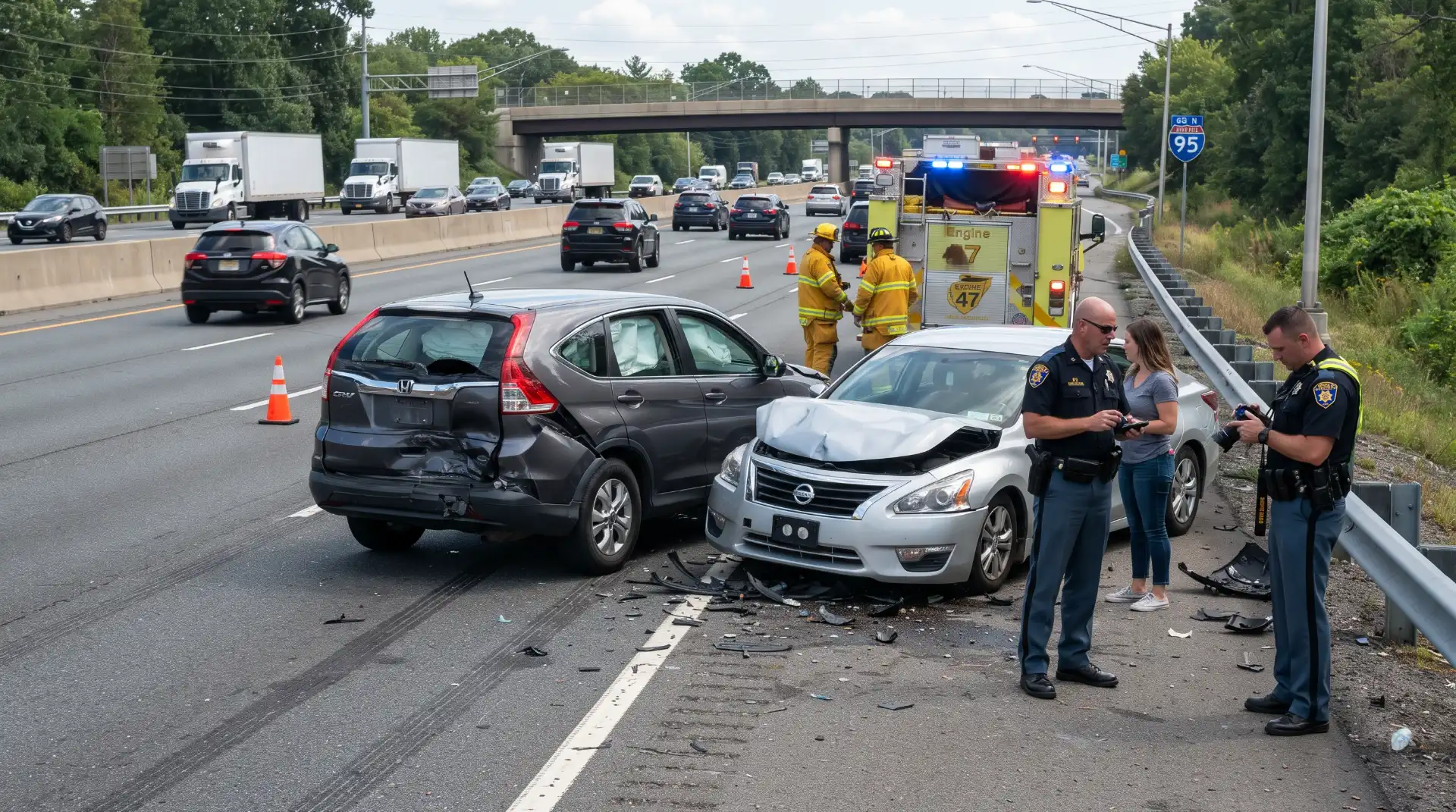
A police report may document statements from the people involved, vehicle positions, citations, road conditions, visible damage, and witness information.
Vehicle data may sometimes provide further information. Modern vehicles can contain electronic information associated with speed, braking, throttle position, and other driving activity. The type and availability of data depend on the vehicle and circumstances.
Smartphone records could become relevant when distraction or communication between involved parties is disputed. Access to private electronic information generally requires appropriate legal procedures.
Photos taken immediately after the crash can document vehicle positions, skid marks, debris, road conditions, traffic signals, and surrounding visibility.
Together, several forms of evidence may provide a clearer picture than any single source.

Why Dashcams Can Matter in Road Rage Cases
Dashcams have become particularly relevant in aggressive driving disputes because they can document conduct that leaves little physical evidence.
A damaged bumper might establish that one vehicle struck another from behind. It may not show that the vehicles had been involved in several miles of aggressive interaction beforehand.
A dashcam could capture the sequence.
Video might show one driver repeatedly cutting off another, accelerating aggressively, blocking passing attempts, or following at close range.
Some cameras also record audio. Audio could provide context if occupants describe what is happening while the event unfolds.
However, footage should generally be preserved in its original form. Editing, compressing, or repeatedly transferring a file can create questions about completeness or authenticity.
Cloud-based footage may also have limited retention periods. The same concern applies to security cameras owned by nearby businesses.
Preserving potential digital evidence early can reduce the risk that relevant recordings disappear.
Common Injuries in Aggressive Driving Crashes
The injuries associated with road rage collisions depend on speed, impact direction, vehicle type, occupant protection, and several other factors.
Rear-end crashes can produce neck, back, shoulder, and head injuries. High-speed highway incidents may result in more serious trauma.
Sideswipe collisions can cause a vehicle to spin, leave the road, strike a barrier, or collide with another car.
Aggressive driving can also cause rollover accidents when a vehicle makes a sharp steering maneuver or leaves the pavement.
Head-on crashes may occur when reckless passing or deliberate swerving places a vehicle in opposing traffic.
Possible injuries include traumatic brain injuries, spinal injuries, broken bones, internal injuries, lacerations, soft tissue injuries, burns, and psychological trauma.
Some injuries appear immediately. Others may become noticeable later.
Medical records can become important evidence connecting diagnosed injuries and treatment to the crash.
What Damages May Be Part of an Injury Claim?
A person injured because of another driver’s conduct may be able to pursue damages under applicable state law.
Potential damages can involve medical expenses, future treatment costs, lost income, diminished earning ability, property damage, physical pain, emotional effects, and other losses associated with the injury.
The exact categories depend on the circumstances and jurisdiction.
Cases involving intentional or highly reckless conduct may also raise questions about punitive or exemplary damages in some states. These damages are different from damages intended to address an injured person’s direct losses.
State law establishes when punitive damages may be considered and what evidence is required.
An aggressive act does not automatically mean punitive damages apply. The facts, driver’s conduct, available evidence, and governing law all matter.
Does Auto Insurance Cover a Road Rage Accident?
Insurance coverage can become one of the more complicated parts of a road rage claim.
Typical liability insurance is designed to address accidents arising from covered driving conduct. However, many policies contain exclusions involving deliberate or intentional acts.
That distinction can become important when a crash involves road rage.
A driver may have acted aggressively without intentionally causing the collision. For example, someone may intentionally speed or tailgate but not intend to hit another vehicle.
Another case might involve allegations that the motorist deliberately struck a vehicle.
Those situations can produce different insurance questions.
Coverage depends on policy language, state insurance law, facts surrounding the collision, and how the driver’s conduct is characterized.
Other coverage may also become relevant depending on the accident, including uninsured or underinsured motorist coverage.
For that reason, a denial based on an intentional-act exclusion does not necessarily answer every potential coverage question surrounding a crash.
Road Rage Accidents Involving Commercial Drivers
Aggressive driving claims are not limited to passenger vehicles.
Commercial trucks, delivery vans, buses, rideshare vehicles, and other vehicles operated for business purposes can also become involved.
When a commercial driver causes a collision, additional information may be available beyond ordinary crash evidence.
Depending on the type of vehicle and employer, evidence could include GPS records, delivery schedules, electronic logging data, telematics, onboard cameras, dispatch communications, vehicle maintenance information, and company safety policies.
An employer or another business entity may also become relevant to a claim depending on the driver’s employment status and applicable state law.
The fact that a commercial vehicle is involved does not automatically make the company responsible. The relationship between the driver, business, and accident needs to be evaluated.
What to Do After an Aggressive Driving Accident
Safety should remain the immediate concern after a road rage encounter.
If the other motorist continues behaving aggressively, avoiding a direct confrontation can reduce the chance of further escalation. Move to a safer location when circumstances permit and contact law enforcement when appropriate.
After a collision, obtain medical attention for injuries and provide accurate information to responding authorities.
Photographs and video can document the vehicles, roadway, damage, and surrounding conditions. Save dashcam recordings promptly if one was operating.
Write down what happened while the details remain fresh. Include behaviors observed before the collision, such as tailgating, repeated lane changes, sudden braking, gestures, pursuit, or blocking.
Witness contact information can also be useful.
Avoid confronting the other motorist about fault at the scene. A road rage incident can remain emotionally charged after vehicles stop.
Information can instead be provided to police, insurers, and legal counsel through appropriate channels.
Road Rage Cases May Involve Criminal and Civil Proceedings
A serious road rage incident may result in both criminal proceedings and a civil injury claim.
These processes serve different purposes.
The government may pursue criminal charges when a driver’s conduct violates criminal law. Possible offenses depend on the state and facts and could involve reckless driving, assault, property crimes, or other allegations.
A civil injury case focuses on responsibility for harm and available damages.
A criminal case and civil case may involve some of the same evidence, but they follow different legal standards and procedures.
A criminal charge does not automatically resolve every issue in a personal injury lawsuit. Similarly, the absence of criminal charges does not necessarily mean a civil claim is unavailable.
Why Preserving Evidence Early Matters
Many forms of crash evidence can disappear quickly.
A nearby store might overwrite surveillance footage within days or weeks. A dashcam may record over an older file. Vehicles may be repaired or sold. Witnesses can become harder to locate.
Digital information may also be subject to retention schedules.
Preservation becomes particularly relevant in road rage cases because the most important evidence may concern events occurring before the collision rather than the impact itself.
An attorney evaluating the matter may identify sources of evidence and determine whether preservation requests or other legal procedures are appropriate.
Evidence collection must also comply with privacy laws, court procedures, and rules governing admissibility.
Dealing With an Insurance Company After a Road Rage Crash
Insurance companies typically investigate fault before determining how a claim may be handled.
An adjuster may request photographs, medical records, recorded statements, police reports, repair estimates, or other information.
Road rage allegations can complicate that investigation.
The insurer might dispute whether the driver acted intentionally. It may question whether both drivers participated in aggressive behavior. It might also examine whether a policy exclusion applies.
Statements made immediately after an emotional incident can become part of the claim record.
Providing accurate information and maintaining copies of relevant documents can help create a clear record of the accident and resulting losses.
People with questions about an insurer’s position can review the applicable policy and speak with a lawyer about their specific circumstances.
How an Accident Lawyer May Help
A road rage injury case may involve more than determining which vehicle made contact first.
A lawyer can review police reports, photographs, videos, witness statements, insurance policies, vehicle information, and medical documentation to evaluate the circumstances surrounding the collision.
Legal counsel may also examine whether additional evidence exists, such as traffic-camera recordings, business surveillance footage, vehicle data, or commercial fleet records.
When several drivers share potential responsibility, an attorney can analyze the applicable state negligence rules.
If an insurer raises an intentional-act exclusion, legal counsel can evaluate the policy language and circumstances underlying the coverage dispute.
Cases involving severe injuries may require additional analysis of medical needs, lost earnings, long-term limitations, and other damages.
Preventing an Aggressive Encounter From Escalating
Drivers cannot control another motorist’s behavior, but they can reduce their participation in a confrontation.
Avoid racing, following an aggressive vehicle, deliberately blocking it, or responding to gestures.
Creating additional distance is often safer than trying to prove a point on the road.
If a driver appears to be following you, driving to a populated location or police station may be safer than driving directly home. Contact emergency services if there is an immediate threat.
The AAA Foundation’s recent research indicates that frustration, perceived threats, retaliation, and attempts to control other motorists can contribute to aggressive driving behaviors.
Refusing to participate can keep a traffic disagreement from developing into a more dangerous encounter.
Road Rage Accidents Can Be More Complicated Than Ordinary Crashes
Road rage and aggressive driving accidents can involve speeding, unsafe maneuvers, emotional behavior, intentional conduct, shared fault, insurance exclusions, digital evidence, and even separate criminal proceedings.
That complexity can make the events leading up to the collision just as important as the point of impact.
Dashcams, surveillance cameras, witness testimony, police reports, vehicle information, photographs, and electronic records may help reconstruct what happened.
State laws also differ significantly. Liability rules, insurance requirements, deadlines, and available damages depend on the jurisdiction where the accident occurred.
Someone injured in a road rage collision can consider speaking with an accident lawyer licensed in the applicable state to discuss the facts, available evidence, insurance issues, and potential legal options.
Authoritative External Resource
For additional information about aggressive driving, excessive speed, and national traffic safety initiatives, visit the National Highway Traffic Safety Administration’s Pathways to Safer Streets.