
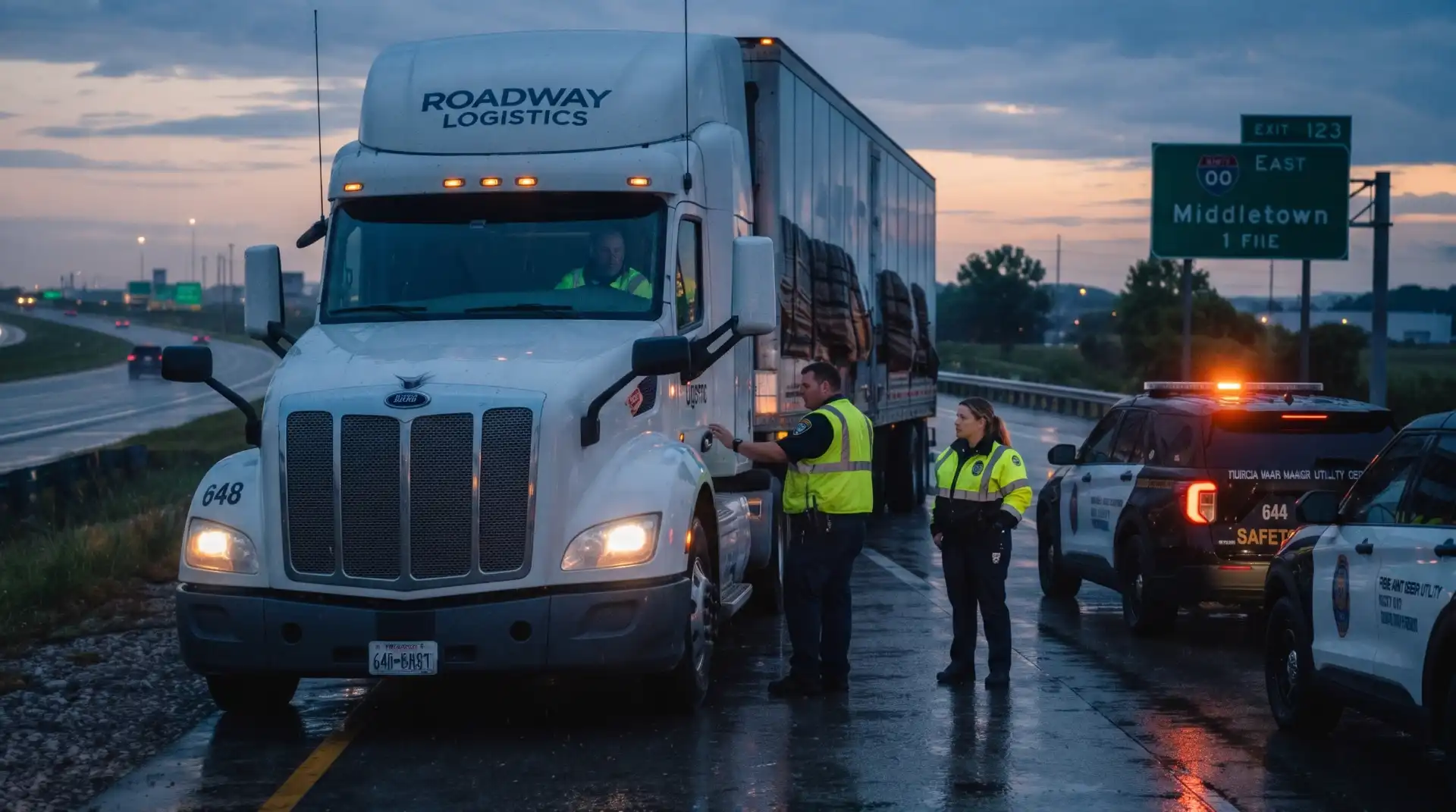
Every single day, thousands of eighty-thousand-pound commercial tractor-trailers crisscross American interstates, delivering essential freight across state lines. Because of their immense weight, length, and kinetic energy at high speeds, operating these massive vehicles demands an exceptional level of skill, physical fitness, mental acuity, and rigorous professional training. When a commercial truck driver lacks the proper qualifications, a fully loaded rig transforms from a vital engine of commerce into a catastrophic hazard for surrounding passenger vehicles.
Despite strict federal frameworks governing commercial motor vehicle operators, unqualified truck driver accidents remain a persistent danger on U.S. highways. Driven by pressing supply chain deadlines, driver shortages, and the temptation to cut operational overhead, some motor carriers bypass background checks, ignore expired medical certifications, or hire operators who lack the necessary commercial driver’s license endorsements. Understanding how unqualified drivers end up behind the wheel, the federal standards that prohibit them from operating, and the legal theories holding trucking companies accountable is essential for victim advocacy and highway safety.
The Anatomy of an Unqualified Commercial Driver
When the public hears the term unqualified driver, many picture an individual operating without any license whatsoever. While unlicensed driving certainly occurs, unqualification within the commercial trucking industry encompasses a far broader spectrum of legal, physical, and technical deficiencies. Federal law strictly defines the precise qualifications a commercial driver must satisfy before taking control of a heavy vehicle on public roads.
At its core, an unqualified driver is anyone who fails to meet the federal baseline established under Title 49 of the Code of Federal Regulations, Part 391. A driver may possess a valid commercial driver’s license (CDL) yet remain legally unqualified to operate a specific combination vehicle due to missing endorsements, an expired medical examiner’s certificate, or an unaddressed history of safety violations.
In other instances, unqualification stems from a total lack of entry-level driver training, an inability to communicate adequately in English to comprehend road signs and official inquiries, or disqualifying criminal or traffic convictions on their record.
Furthermore, physical unqualification represents a significant risk category. Commercial driving is a physically demanding profession that requires sustained concentration, sharp vision, quick reaction times, and cardiovascular health. Drivers suffering from untreated sleep apnea, severe cardiovascular conditions, uncontrolled diabetes, or substance dependency fail to meet federal medical fitness standards.
When a motor carrier permits an individual with a lapsed or fraudulently obtained medical card to haul heavy freight, they place every motorist sharing the road in immediate danger.

The Regulatory Framework: 49 CFR Part 391
To safeguard the public, the Federal Motor Carrier Safety Administration (FMCSA) enforces comprehensive regulations detailing driver fitness and qualification criteria. Under federal law, the primary responsibility for ensuring driver qualification rests squarely on the shoulders of the motor carrier. Trucking companies are legally forbidden from permitting an individual to drive a commercial motor vehicle unless that driver fully satisfies every requirement outlined in federal law.
According to federal standards, a qualified commercial driver must be at least twenty-one years of age for interstate commerce, possess adequate English language proficiency to read highway signs and complete official logs, and hold a valid CDL issued by a single state with appropriate endorsements for the specific vehicle class and cargo being transported. Additionally, the driver must pass a physical examination conducted by a certified medical examiner listed on the National Registry and complete a comprehensive road test administered by the motor carrier or its designated safety evaluator.
FMCSA Compliance Pipeline
Background Inquiry (3-Year History Check)
Medical Examination (National Registry Certification)
CDL Verification & Specific Endorsement Check
Practical Road Test & Performance Evaluation
Annual Record Review & DQF Maintenance
To prove compliance, motor carriers are required to create and maintain a Driver Qualification File (DQF) for every operator in their fleet. The DQF acts as a living document, capturing the driver’s employment application, three-year safety performance history inquiry from previous employers, state motor vehicle records (MVRs), annual review notes, medical certificates, and road test certifications.
When a crash occurs, the DQF is often the first file requested by safety investigators and plaintiff attorneys, as missing or incomplete documentation serves as direct evidence that the carrier failed in its regulatory duty.
Detailed regulatory requirements regarding driver qualification files, medical fitness standards, and safety compliance checklists are made publicly available directly through the official Federal Motor Carrier Safety Administration regulatory database.
Primary Categories of Unqualified Driver Hazards
Unqualified driver crashes do not happen by chance; they stem from distinct categories of non-compliance and skill deficits. Analyzing these categories helps reveal why an unqualified operator behaves differently on the road compared to a seasoned, fully certified commercial trucker.
Lapsed or Missing Commercial Driver’s Licenses (CDL)
Operating a Class A or Class B commercial tractor-trailer requires specialized technical knowledge that far exceeds standard passenger vehicle operation. When a driver operates without a valid CDL—either because their license was suspended due to prior traffic violations or because they never underwent proper testing—they lack verified competence in handling double-clutching, pneumatic brake management, trailer sway, and wide-turn geometry. Unlicensed drivers frequently mishandle emergency braking situations, causing jackknife accidents or rollover events.
Lack of Entry-Level Driver Training (ELDT)
Modern regulations mandate that first-time CDL applicants complete standardized Entry-Level Driver Training covering basic control maneuvers, pre-trip vehicle inspections, hazard perception, and night driving. Drivers who bypass this structured training through informal hiring practices often struggle with spatial awareness, mirror usage, and speed management on steep mountain downgrades. Their inability to anticipate traffic flow leads to high-speed rear-end collisions in highway construction zones and heavy stop-and-go traffic.
Missing Specialized Cargo Endorsements
Hauling hazardous materials, liquid bulk tankers, or oversized combination loads requires specialized training and state-issued endorsements. For example, operating a liquid tanker requires mastering the physical dynamics of liquid surge—the movement of thousands of gallons of fluid shifting inside an unbaffled tank during stopping or turning. An unqualified driver without a tanker endorsement may brake abruptly, causing the sloshing liquid weight to push the truck straight through an intersection or overturn the vehicle entirely.
Medical Unfitness and Disqualifying Health Conditions
Commercial driving places severe physical stress on the body. Drivers with unmanaged hypertension, severe cardiovascular disease, or untreated sleep apnea face heightened risks of sudden incapacitation or micro-sleep episodes behind the wheel. When a motor carrier ignores a lapsed medical certificate or fails to verify that a driver’s medical examiner was listed on the official registry, they risk placing a driver prone to sudden loss of consciousness in charge of a massive moving vehicle.
Language Barriers and Regulatory Comprehension
Federal rules explicitly state that a driver must speak and read English sufficiently to converse with the public, comprehend official traffic signage, and respond to law enforcement inquiries. While language diversity is common, an inability to read English safety signs—such as runaway truck ramp warnings, low-clearance bridge indicators, or hazardous cargo detour postings—directly contributes to avoidable bridge strikes, brake burnouts, and highway disasters.
Comparative Analysis: Qualified vs. Unqualified Risk Indicators
Comparing the operational practices and compliance standards of qualified drivers against the red flags associated with unqualified operators highlights the vast difference in safety culture.
| Operational & Regulatory Indicator | Fully Qualified Commercial Driver | Unqualified / Non-Compliant Operator |
| Licensure & Endorsements | Holds valid single-state CDL with verified Class A/B endorsements for specific cargo. | Operates with lapsed CDL, wrong vehicle class, suspended privilege, or missing endorsements. |
| Medical Certification | Valid DOT medical card from a registry examiner; annual or biennial re-examinations. | Expired medical card, unmanaged disqualifying conditions, or fraudulent certification. |
| Driver Qualification File (DQF) | Complete, audited file including 3-year employment history check and annual MVRs. | Incomplete application, missing previous employer inquiries, or no annual MVR checks. |
| Training & Skill Testing | Verified ELDT completion, formal road test certificate, and vehicle-specific instruction. | Informal self-training, no certified road test, or unfamiliarity with manual transmissions/air brakes. |
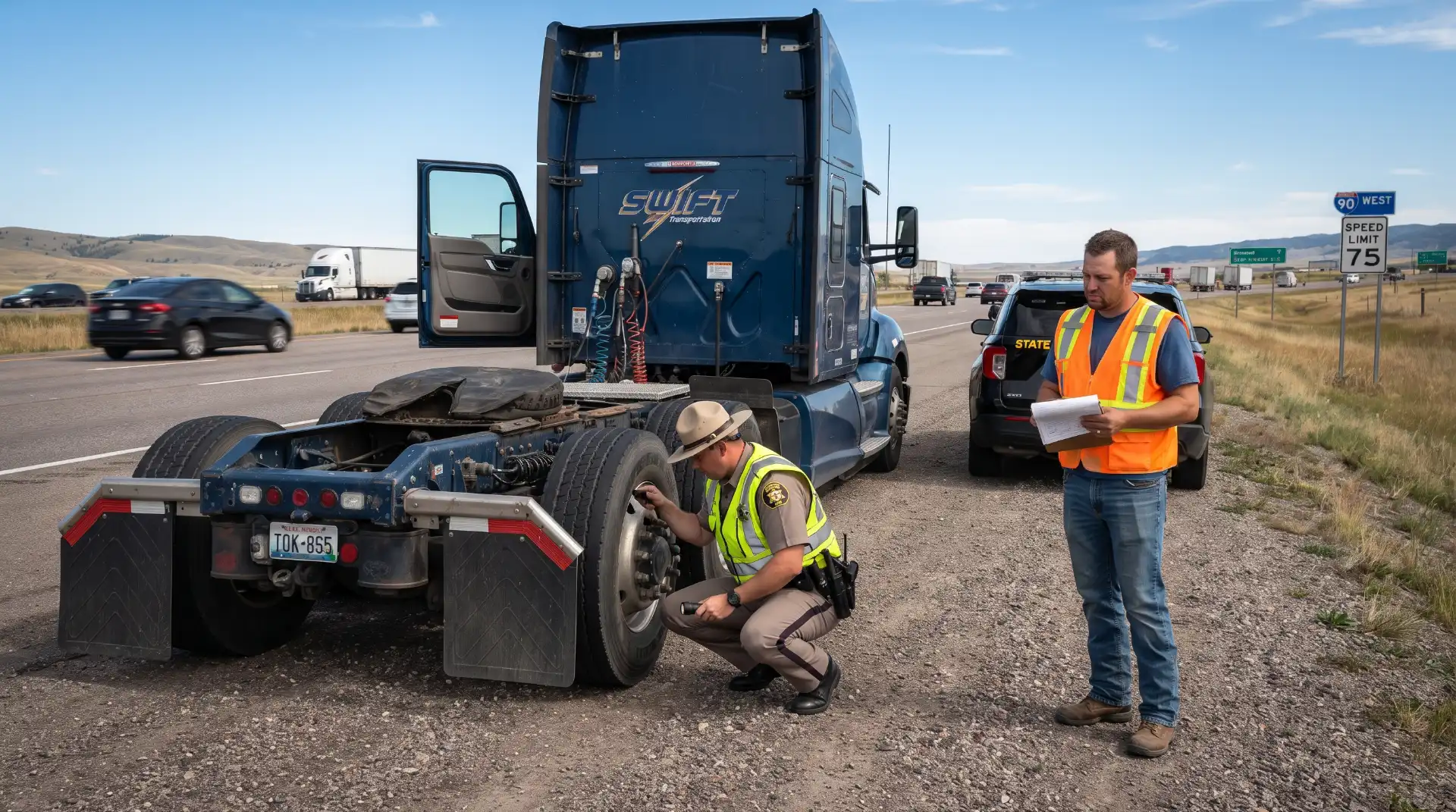
| Roadside Inspection Performance | Clean inspection records with low Out-of-Service (OOS) rates across safety categories. | Frequent driver fitness violations, out-of-service orders, or logbook falsifications. |
Corporate Negligence: Why Carriers Hire Unqualified Drivers
Given the stringent legal requirements and obvious danger, why do motor carriers continue to put unqualified drivers behind the wheel? The answer almost always boils down to economic pressures, operational shortcuts, and systemic corporate oversight failures.
The commercial transportation industry has experienced a chronic driver shortage for years. High turnover rates, coupled with surging demand for rapid freight delivery, put immense pressure on trucking companies to keep their fleets moving. When trucks sit idle, freight companies lose money. To prevent empty cabs, some unethical or financially strained carriers lower their hiring standards, streamline vetting procedures, or turn a blind eye to obvious discrepancies in an applicant’s work history.
Corporate negligence in truck driver hiring is rarely an isolated oversight; it is typically a structural decision to prioritize freight delivery speed over public safety.
Systemic hiring shortcuts manifest in several ways:
-
Pencil-Whipping Qualification Documents: Safety managers may fill out road test evaluation forms without ever placing the applicant behind the wheel for a real-world driving test.
-
Failing to Verify Employment History: Regulations require carriers to contact every former employer from the preceding three years to investigate safety performance records. Skipping this step allows drivers with histories of reckless driving or failed drug tests to secure employment elsewhere.
-
Ignoring Annual Records Reviews: Motor carriers must pull updated state driving records for all active drivers at least once every twelve months. Failing to perform annual reviews allows drivers whose licenses were suspended for off-duty infractions to continue driving commercial routes undetected.
-
Misclassifying Employees as Independent Contractors: Some carriers attempt to dodge regulatory oversight by classifying underqualified operators as independent contractors, claiming the company is not responsible for auditing the contractor’s qualifications or medical status.
Real-World Collisions Caused by Skill Deficiencies
When an unqualified driver takes control of an eighty-thousand-pound rig, the resulting driving errors often trigger severe, multi-vehicle crashes. Examining common accident scenarios reveals how specific skill deficits lead directly to highway crashes.
Mountain Downgrade Brake Overheating
Descending a steep mountain grade in a heavy commercial truck requires understanding engine braking, gear selection, and snub-braking techniques. An unqualified driver who lacks proper hill-descent training often relies entirely on the vehicle’s service brakes.
Continuous braking on a long descent generates intense friction heat, expanding the brake drums and glazing the brake shoes. Once the brakes overheat, friction drops to near zero, sending an out-of-control vehicle speeding down the mountain into congested highway traffic.
Underride Collisions During Improper Turns
Making a right turn in a fifty-three-foot tractor-trailer requires swinging wide to the left—a maneuver known as the “buttonhook turn”—to prevent the trailer rear wheels from clipping the curb or trapping cars.
An untrained driver may execute a “jug-handle turn” by pulling far to the right first, creating a wide opening on their left side. Passenger car drivers naturally assume the truck is turning left and proceed forward, only for the truck driver to cut back sharply across traffic lanes, trapping the passenger car beneath the side of the trailer in a devastating underride crash.
High-Speed Rollovers on Highway Off-Ramps
Commercial trailers have a high center of gravity, making them susceptible to tipping over if entering curved exit ramps at excessive speeds. Experienced CDL drivers understand that advisory speed limits on ramp signs are designed for passenger vehicles and that heavy rigs must slow down well before entering the curve. An under-trained driver who fails to scrub off speed prior to the curve experiences sudden centrifugal load shift, causing the trailer tires to lift off the pavement and rolling the rig across multiple lanes.
Legal Theories for Holding Trucking Companies Accountable
When an unqualified driver causes a catastrophic crash, legal accountability extends beyond the person behind the wheel. Under state and federal laws, injured victims and surviving family members can hold the motor carrier directly liable through several legal causes of action.
Negligent Hiring
Negligent hiring occurs when a trucking company fails to conduct an adequate background check prior to hiring an applicant. If a reasonable investigation would have revealed that the driver lacked a valid CDL, had a history of preventable crashes, or failed prior drug screenings, the company is directly liable for putting an unsafe operator on the road.
Negligent Retention and Supervision
Even if a driver was qualified when initially hired, their status can change. If a driver accumulates multiple speeding tickets, tests positive on a random drug screen, or allows their medical card to expire during employment, the carrier must remove them from service immediately. Retaining or failing to supervise a driver who has become unqualified renders the company liable for negligent retention.
Negligent Entrustment
Under the doctrine of negligent entrustment, a vehicle owner is liable if they knowingly permit an inexperienced, reckless, or incompetent individual to operate their equipment. Proving negligent entrustment requires showing that the motor carrier knew, or should have known through basic due diligence, that the driver was unfit to operate the commercial vehicle safely.
Respondeat Superior (Vicarious Liability)
Under standard agency law, an employer is vicariously liable for the negligent acts performed by its employees within the scope of their employment. If an unqualified driver makes a driving error that causes a crash while hauling freight for the company, the motor carrier is financially responsible for the resulting damages, regardless of whether direct corporate negligence can be proven.

Evidence Critical to Proving Driver Unqualification
Building a successful legal claim involving an unqualified commercial driver requires gathering and preserving critical evidence before it is destroyed or routinely purged by the motor carrier.
Spoliation Letters and Immediate Evidence Preservation
Immediately following a serious truck accident, the victim’s legal team must send a formal letter of spoliation to the trucking company, its insurance carriers, and involved third parties. This legal notice demands the preservation of all electronic and physical records, preventing the company from destroying driver logs, maintenance records, or internal emails under standard document retention policies.
Key Evidentiary Files
-
The Official Driver Qualification File (DQF): Examining the DQF reveals missing medical certificates, omitted background checks, or falsified road test forms.
-
Electronic Logging Device (ELD) & Telematics Data: Modern ELD systems track drive times, vehicle speeds, GPS locations, and hard-braking events. Comparing ELD data against the driver’s logs can expose driving pattern violations or falsified records.
-
State Motor Vehicle Records (MVRs): Independent MVR pulls verify whether the driver held a valid CDL on the day of the crash, had prior license suspensions, or lacked required endorsements.
-
FMCSA Drug and Alcohol Clearinghouse Records: Querying the national Clearinghouse database reveals whether the driver had unresolved drug or alcohol violations from previous employers.
-
Cab Camera Footage: Dual-facing dash cameras record both the forward roadway and driver behavior inside the cab. Video footage often provides undeniable evidence of driver distraction, panic, or physical incompetence during critical seconds leading up to impact.
Essential Steps for Victims Following a Truck Crash
Surviving a crash with an eighty-thousand-pound commercial vehicle is a traumatic experience. Taking strategic steps in the immediate aftermath protects your health, rights, and potential legal claims.
1. Prioritize Emergency Medical Attention
Always accept immediate medical evaluation at the scene, even if you believe your injuries are minor. Adrenaline can mask severe internal bleeding, soft tissue damage, or traumatic brain injuries. Establishing a clear, immediate medical record links your injuries directly to the collision.
2. Ensure Police Document Complete Driver Information
Request that responding law enforcement officers document all driver credentials, including the driver’s CDL number, state of issuance, medical card status, and the motor carrier’s USDOT and MC identification numbers. Ensure officers note any suspicion of driver impairment, fatigue, or lack of proper documentation in the official police report.
3. Photograph the Scene, Vehicles, and Environment
If physically able, take photos and videos of the crash scene from multiple angles. Capture vehicle positions, skid marks, road debris, property damage, weather conditions, and visible traffic signs. Photograph the commercial truck’s license plates, USDOT markings on the cab doors, and any cargo spillage.
4. Avoid Making Statements to Insurance Adjusters
Trucking company risk managers and insurance adjusters often arrive at major crash scenes within hours. They may attempt to interview injured victims, request recorded statements, or offer quick settlement checks. Politely decline to give recorded statements or sign release forms until you have consulted with an experienced attorney.
5. Consult a Specialized Truck Accident Attorney
Commercial truck litigation involves complex federal regulations, corporate structures, and multi-layered insurance policies. Retaining an attorney who specializes in commercial vehicle accidents ensures that spoliation notices are served promptly, regulatory violations are uncovered, and all liable parties are held accountable.
Industry Reforms and the Path to Safer Highways
Preventing unqualified driver accidents requires a multi-faceted approach combining strict regulatory enforcement, technological integration, and corporate accountability.
Future Safety Architecture
Digital DQF Automation & Real-Time MVR TrackingMandatory Integration of Drive-Cam AI TechnologyFederal Drug & Alcohol Clearinghouse EnforcementStiffer Penalties for Non-Compliant Motor Carriers
State and federal authorities continue to expand automated oversight tools. Real-time driver license monitoring systems now alert safety managers immediately whenever a driver’s license is suspended or an updated medical card is not filed with the state licensing agency.
Simultaneously, advanced artificial intelligence driver-assist systems (ADAS) are becoming standard across major commercial fleets. Features like automatic emergency braking, lane-keeping assistance, and blind-spot monitoring provide crucial safety nets, helping mitigate human error when less experienced drivers are on the road.
However, technology alone cannot replace thorough vetting and proper training. Motor carriers must realize that investing in comprehensive recruitment, continuous safety education, and rigorous compliance checks is far less costly than paying for the devastating human and financial toll of a severe accident.
By enforcing strict driver qualification standards and holding negligent carriers accountable in court, the transportation industry can move closer to ensuring that every commercial truck on the highway is driven by a skilled, qualified professional.